“Aquaterra”: Archaeologists explore submerged lands hiding the secrets of ancient civilizations
Researchers are studying submerged coastal areas that were once dry land and may have been centers of human development.
 🎓Education
Photo: UNIAN
Key points
- The term “Aquaterra” covers submerged coastal territories of 22.5 million sq. km.
- Lower sea levels during glacial periods allowed humans to inhabit new lands.
- Archaeologists are finding tools and building remains on the seabed dating back 12,000 years.
Over the last 120,000 years, global climate changes and sea-level fluctuations have significantly altered the world map. In 1999, geographer Jerome Dobson coined the term “Aquaterra” to describe vast coastal areas totaling approximately 22.5 million square kilometers that were submerged following the melting of glaciers.
New horizons in underwater archaeology
During glacial periods, sea levels were significantly lower, opening up new plains, forests, and fertile lands for early humans. Scientists suggest that these territories were the sites of key stages in human progress and technological innovation, which are now hidden beneath the water.
Modern archaeologists, such as Michael Faught and Morgan Smith, are actively using mapping and soil analysis techniques to locate artifacts. In the Gulf of Mexico and near Belize, researchers have already discovered traces of ancient settlements, building remains, and tools dating back 12,000 years. These findings confirm that a significant portion of human history remains inaccessible on modern land.
Source UNIAN — unian.ua/science/pid-vodu-pishla-susha-rozmirom-iz-pivnichnu-amerik… ↗
Read next
 ⚽Sport
Alexander Zverev reaches ATP Finals 2026 final
World No. 1 Alexander Zverev defeated Daniil Medvedev in the Turin semi-finals and is set to face Carlos Alcaraz for the title.
 🏙️City
FBI investigates repeated breach of key law enforcement database
The FBI is investigating another unauthorized access incident involving the National Crime Information Center database.
 🚨Events
Car plunges into the Dnieper in Cherkasy: two women killed
On the night of November 21, an SUV drove into the Dnieper River in Cherkasy, resulting in the death of two female passengers.
 🛡️Security
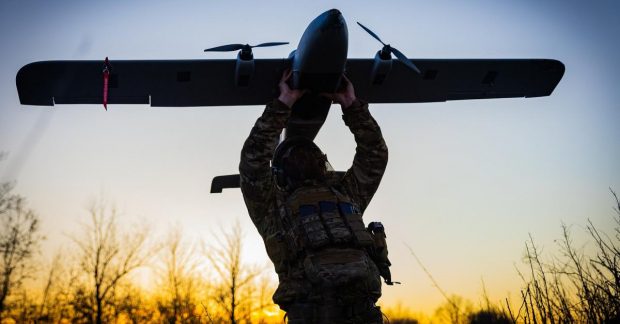
UK to Finance Mass Production of Ukrainian Long-Range Drones
Ukraine and the UK have signed an agreement on joint drone production, enabling the scaling of effective strike capabilities for the Armed Forces.
 🏛️Politics
Political analyst explains reasons for Putin's likely absence from G20 summit
Expert Yuriy Bogdanov attributes the Russian leader's potential refusal to attend the G20 summit in Miami to personal fears and a desire to avoid diplomatic isolation.
 🛡️Security
Russian attack on Zaporizhzhia leaves three injured, including children
Three civilians, including two children, were injured following a Russian guided aerial bomb attack on the city of Zaporizhzhia.